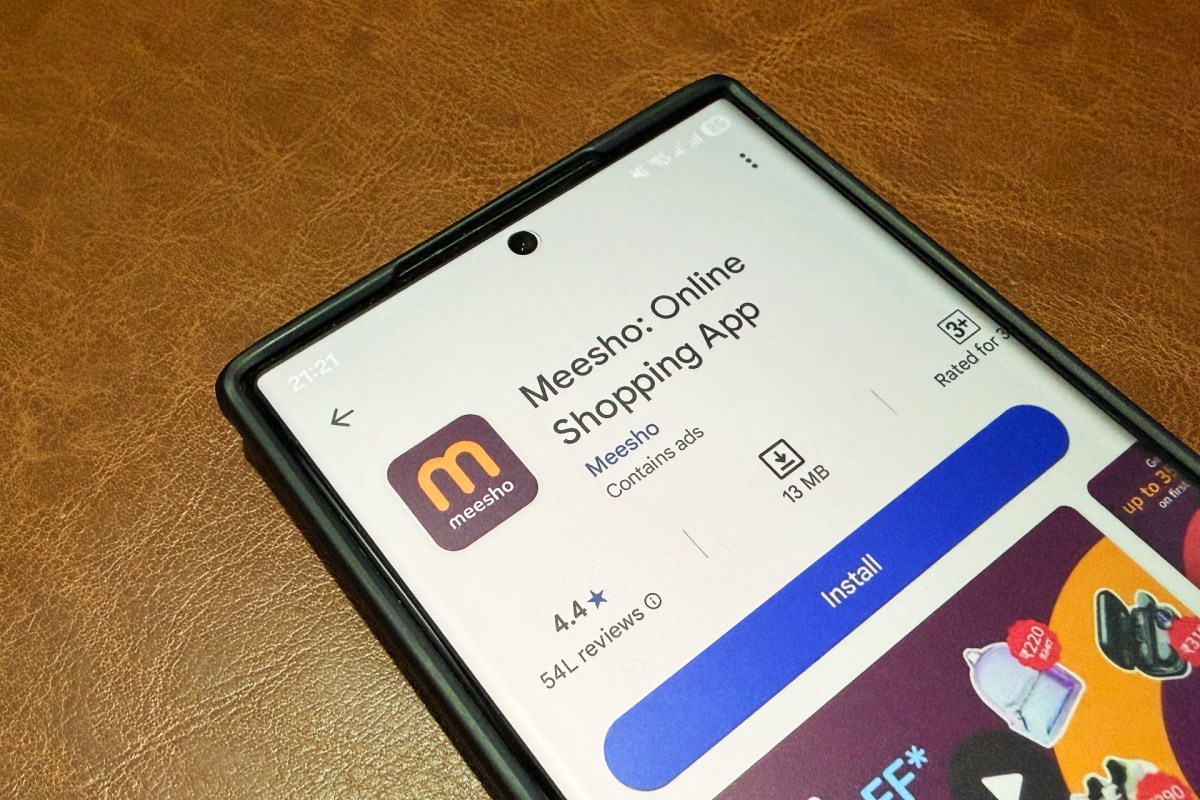

Indian e-commerce firm Meesho, a competitor to Amazon and Flipkart (owned by Walmart), is preparing to launch an IPO of roughly $606 million. The IPO will feature minor stake sales by early investors, but no sales from major backers such as SoftBank and Prosus, indicating strong investor confidence in India’s growing online retail sector during a period when tech shareholders worldwide have been selling off at listings.
The startup, which is ten years old, intends to price its shares between ₹105 and ₹111 apiece, aiming to raise ₹42.50 billion (approximately $475 million) in new capital and a small amount through secondary sales. This would give Meesho a post-issue valuation of about ₹501 billion (roughly $5.60 billion). In 2021, the startup was last valued at around $5 billion in private markets.
Meesho is poised to become the first major horizontal e-commerce platform in India to go public. Its rival, Flipkart, is expected to pursue an IPO next year, and Amazon is reportedly considering a potential spin-off of its India operations, possibly for a future listing.
Some of Meesho’s initial shareholders are selling shares in the IPO. Elevation Capital is offloading slightly more than 4% of its stake, Sequoia Capital spin-off Peak XV Partners is selling about 3%, and Y Combinator is reducing its stake by approximately 14%, according to the prospectus (PDF). Larger investors, including SoftBank, Prosus, and Fidelity, are not selling any shares.
The offer-for-sale portion of Meesho’s IPO has been reduced by roughly 40% from the draft prospectus filed in October, now totaling 105.5 million shares, worth ₹11.7 billion (about $131 million) at the upper end of the price range. However, the co-founders, Vidit Aatrey and Sanjeev Kumar, are selling more shares than initially planned in the draft prospectus, with their combined offer increasing from approximately 23.5 million to 32 million shares, compensating for the decreased participation from other shareholders.
Founded in 2015, Meesho started as a social commerce platform targeting first-time online shoppers via WhatsApp before evolving into a comprehensive marketplace. It has since developed a rapidly expanding niche with a low-cost model designed for India’s price-conscious consumers and small merchants — an approach that has put increasing pressure on larger competitors like Amazon and Flipkart. The Bengaluru-based firm employs a low-commission model, primarily generating revenue from logistics fees, advertising, and other services, while also charging commissions on products sold through its separate Meesho Mall channel.
According to its prospectus, Meesho reported revenue from operations of ₹55.78 billion (about $624.0 million) for the six months ending September 30, an increase from ₹43.11 billion (approximately $482.0 million) in the prior year. Net merchandise value increased by 44% year-over-year to ₹191.94 billion (around $2.15 billion). However, its losses grew, with Meesho reporting a restated pre-tax loss of ₹4.33 billion (approximately $48.4 million) for the half-year ending September 2025, compared to ₹0.24 billion (about $2.7 million) in the previous year.
Over the past year, Meesho recorded 234.20 million transacting users — individual consumers who purchased at least one item on the platform. During the same period, the company had 706,471 annual transacting sellers, defined as sellers who received at least one order during the year.
Meesho also leverages an extensive creator network for product discovery, with over 50,000 active content creators generating at least one placed order through their content in the last year.
“Many Indians are experiencing e-commerce for the first time on Meesho, and like the rest of us, they will increasingly buy more items, more frequently on this platform over the next decade,” Mohit Bhatnagar, managing director at Peak XV Partners, told TechCrunch. “That’s why our long-term conviction drives us to retain as much of our stake as possible.”
Peak XV — which initially invested in Meesho in 2018 during its Sequoia Capital India phase and holds approximately 13% across its two investment vehicles — is selling about 17.38 million shares in the IPO.
Meesho has presented itself as a value-oriented platform, distinguishing itself from Amazon and Flipkart, which it views as convenience-driven players. In this regard, the company draws comparisons to other value-focused marketplaces such as Pinduoduo in China, Shopee in Southeast Asia, and Mercado Libre in Latin America.
“When considering the value-focused segment, the aim is to attract mass market consumers by offering a wide array of products and categories through a marketplace business model, which tends to be asset-light,” Aatrey told reporters during Meesho’s press conference on Friday. “The reason people return is because they seek access to a greater selection of affordable products.”
Meesho also believes that the IPO will enhance its ability to attract talent and boost confidence across its broader ecosystem, according to CFO Dhiresh Bansal in a statement to TechCrunch. He stated that a public listing strengthens the company’s brand among potential employees — including those from major tech companies — and positively impacts consumers, sellers, and logistics partners by reinforcing Meesho’s governance standards.
The IPO will be available for public subscription starting December 3, with the anchor book scheduled for December 2. Approximately 75% of the offering is allocated for qualified institutional buyers, 10% for retail investors, and 15% for non-institutional investors.
SoftBank did not respond to a request for comment.