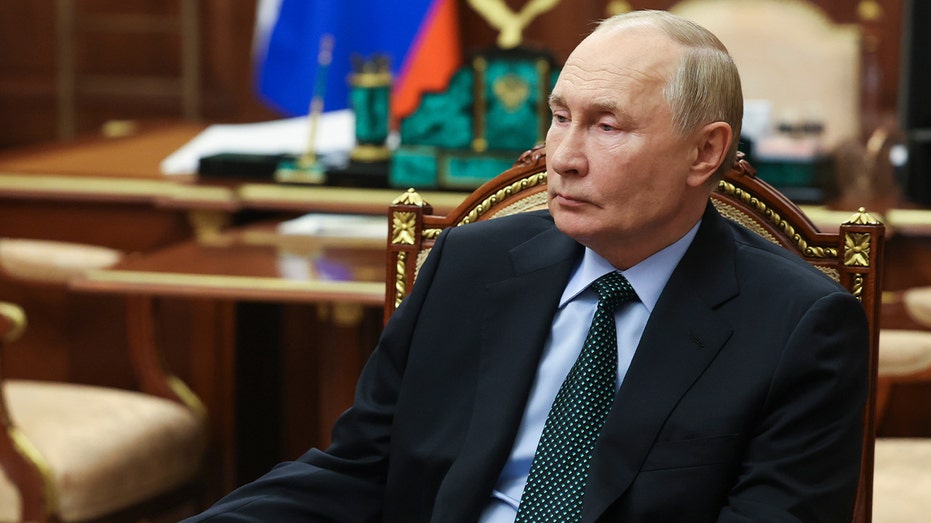
White House representative Steve Witkoff is in Moscow and is scheduled to meet with Russian President Vladimir Putin on Tuesday following a busy weekend of discussions with Ukraine, all aimed at reaching a peace agreement.
All eyes are on Putin as Witkoff and Jared Kushner, President Donald Trump’s son-in-law and occasional foreign policy representative, try to discern whether Putin might agree to the 19-point plan they finalized with Ukrainian counterparts after initial U.S.-Russian discussions.
This latest diplomatic effort is the most significant push towards a possible resolution since the full-scale invasion in 2022, but negotiators admit that considerable challenges persist. Key disagreements regarding territory, Ukraine’s future security arrangements, and the prerequisites for any ceasefire remain unresolved, and officials state that progress will hinge on Putin’s willingness to compromise during this week’s meetings.
After an initial 28-point plan facilitated by Witkoff and Russian envoy Kirill Dmitriev was deemed by Kyiv as overly favorable to Moscow, U.S. and Ukrainian officials revisited the drawing board. They convened in Geneva in late November to refine a more concise version of the plan and again over the weekend in Florida to finalize additional details.
UKRAINE PEACE EFFORTS GAIN TRACTION, BUT EXPERTS FEAR PUTIN WILL NOT COMPROMISE
Both sides described the talks as productive but did not specify the remaining points of contention.
“Much remains to be done,” Secretary of State Marco Rubio stated after the meeting. “However, today was another productive and valuable session where I believe further headway was made.”
“There’s a solid chance we can strike a deal,” Trump remarked.
ZELENSKYY CLAIMS PUTIN IS ‘SOMEWHAT AFRAID’ OF TRUMP AS PEACE NEGOTIATIONS BEGIN
Despite the progress, the two sides are still considerably divided. Several of the most delicate matters were reserved for a meeting between top leaders.
Russia insists that Ukraine cannot join the North Atlantic Treaty Organization — even though Ukraine enshrined NATO membership in its constitution as a national objective. In the original 28-point plan, Russia also demanded that Ukraine reduce its peacetime armed forces to 600,000 personnel.
European and Ukrainian officials suggested a limit of 800,000 instead, according to the Financial Times. Ukraine currently has approximately 880,000 troops, up from around 209,000 prior to the 2022 invasion.
STATE DEPARTMENT SAYS UKRAINE IS PREPARED TO ACCEPT A 30-DAY CEASEFIRE AGREEMENT: ‘THE NEXT MOVE IS RUSSIA’S’
The biggest hurdle remains territorial concessions. An earlier draft of the proposal suggested recognizing Crimea and significant portions of the Luhansk, Donetsk, Kherson, and Zaporizhzhia regions as effectively Russian.
Adding complexity to the situation is the recent departure of Ukrainian President Volodymyr Zelenskyy’s chief of staff and lead negotiator, Andriy Yermak, who resigned after a corruption investigation led to a search of his residence. Just days before, Yermak had publicly asserted that Ukraine would not cede land for peace.
“No rational person would agree to give up territory today,” he told The Atlantic magazine.
Putin stated in late November that he was ready for “serious” discussions but also maintained that Russia has the advantage and would only cease hostilities if Ukrainian forces retreat from territory they have reclaimed on the front lines.
“If they do not withdraw, we will achieve this by force,” he said.
Analysts suggest Washington still possesses tools it could employ if negotiations falter, including intensifying sanctions and increasing military aid to Ukraine. However, many of the most impactful economic measures — such as sanctions on major Russian energy and financial institutions — are already in effect, and the U.S. has provided Ukraine with tens of billions of dollars in military assistance since 2022.
This leaves a more limited range of options if the talks reach a standstill.
Trump has expressed dissatisfaction with the slow pace of diplomacy recently, stating publicly that he believed a resolution “should have been reached long ago,” although officials have not indicated that Washington is planning to withdraw from the discussions.