A federal appeals court has put a stop to a lower-court ruling that aimed to limit how immigration officials can use force during enforcement activities in the Chicago area, deeming the judge’s decree “overbroad” and “too prescriptive.”
The Seventh Circuit panel warned against “overreading” its suspension, stating that a swift appeal might produce a “more tailored and appropriate” ruling.
Earlier in the month, U.S. District Judge Sara Ellis issued a preliminary injunction after media outlets and demonstrators alleged that federal officers used excessive force during an immigration operation that has led to over 3,000 arrests since September in Chicago and surrounding communities.
Justice Department lawyers contended that the order limited law enforcement’s ability to perform its duties and could “subvert” the constitutional framework.
BLUE CITY JUDGE CITES ‘FEAR OR OBSTRUCTION’ IN BLOCKING ICE COURTHOUSE ARRESTS DURING COURT PROCEEDINGS
The panel stated that the order was “too prescriptive” because it itemized riot control weapons and other devices in a manner that “resembles a federal regulation.”
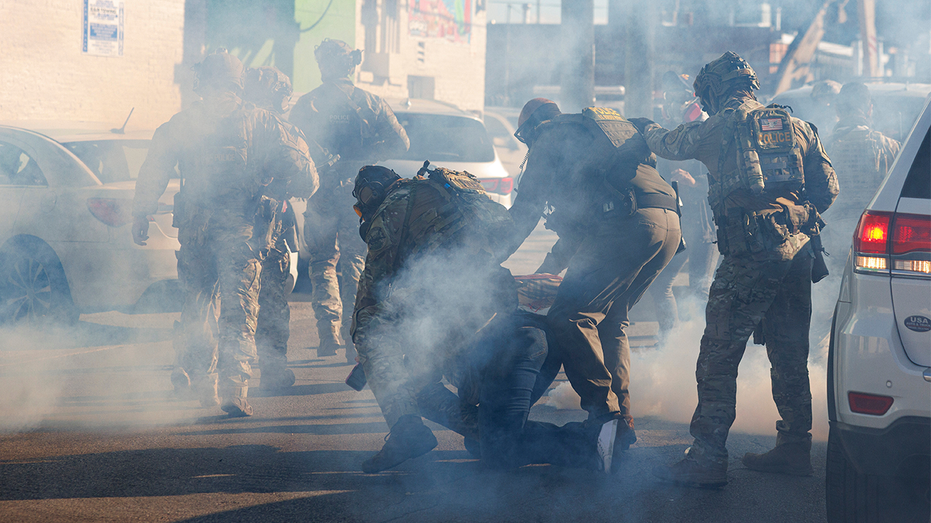
Ellis’ ruling prevented agents from using physical force and chemical agents, such as tear gas and pepper balls, unless required or to avert “an immediate threat.” The judge asserted that the use of those tools infringed upon the constitutional rights of journalists and protesters.
Witnesses informed the court that they were tear-gassed, shot with pepper balls while praying, and had guns aimed at them.
FEDERAL JUDGE SAYS ICE DETAINEES ‘SHOULDN’T BE SLEEPING NEXT TO OVERFLOWING TOILETS’ AT CHICAGO-AREA FACILITY
Ellis determined that Trump administration witnesses were “simply not credible,” including Gregory Bovino, a Border Patrol commander who headed the Chicago area operation before transferring to North Carolina.
Bovino has defended the agents’ use of force and supervised approximately 230 officers from U.S. Customs and Border Protection in the region starting in September. Federal border agents are anticipated to be deployed to New Orleans next.
The immigration operation has spurred multiple lawsuits, including allegations of inhumane conditions at a federal immigration facility — claims that prompted a federal judge and attorneys to visit the U.S. Immigration and Customs Enforcement center outside Chicago last week.
DHS spokeswoman Tricia McLaughlin described the stay as “a win for the rule of law and for the safety of every law enforcement officer.”
The Associated Press contributed to this report.