More than half a million women and girls in the United States are living with the physical and psychological scars of female genital mutilation — including many in Minnesota, home to a large Somali community from a country where roughly 98% of women have undergone the procedure, according to United Nations data.
Yet despite a state law that makes performing the procedures a felony, Minnesota has never secured a single criminal prosecution under its law — raising questions about enforcement, and whether cases could be going on undetected.
Female genital mutilation, or FGM, involves the cutting or removal of parts of a female’s genital organs, typically for cultural rather than medical reasons. The practice is irreversible.
“It’s hidden — it’s a cultural practice, and who is doing the cutting could be a family member or a doctor who is also in that same culture,” Minnesota Republican state Rep. Mary Franson told Fox News Digital, noting it may be carried out within tight-knit communities. She said the secrecy surrounding the practice makes it exceptionally difficult to detect and confront.
MINNESOTA ‘ON THE CLOCK’ AS HHS THREATENS PENALTIES OVER CHILDCARE FRAUD SCANDAL
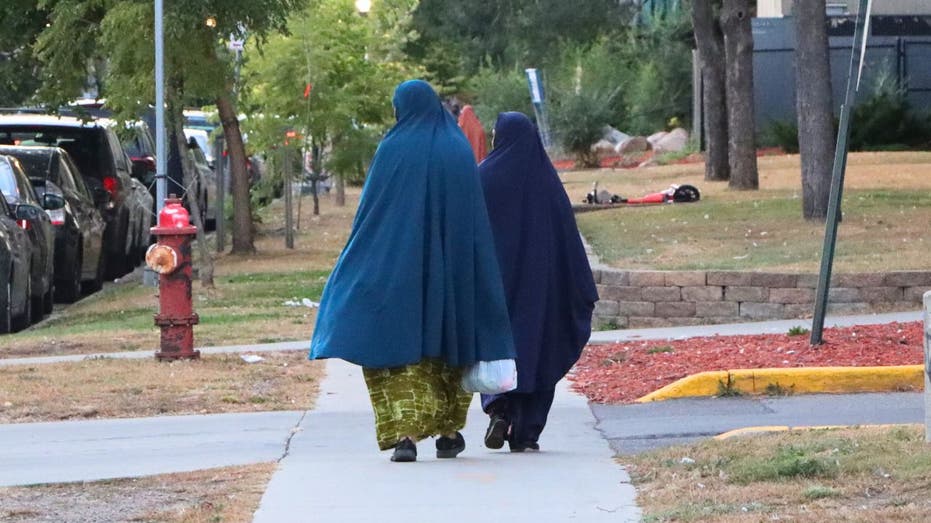
For some within Minnesota’s Somali community, the issue is less about public crime statistics and more about private silence — a practice survivors say is carried in secrecy, shame and fear.
The lack of prosecutions comes amid broader scrutiny of how Minnesota agencies handle oversight failures, including high-profile welfare and daycare fraud cases in which prosecutors allege billions of taxpayer dollars were siphoned off while warning signs went unaddressed. Investigators and watchdogs later concluded that officials were reluctant to probe deeply in culturally sensitive contexts — a reluctance, critics say, allowed large-scale violations to persist in plain sight.
The estimate of more than half a million survivors in the United States comes from the Centers for Disease Control and Prevention’s most recent national analysis, published in 2016.
Together, the scale of the issue and the difficulty of detection have raised questions about whether Minnesota’s ban on FGM is being effectively enforced when the crime is often carried out in secrecy.
Ayaan Hirsi Ali, a Somali-born activist and author who survived FGM, described the lasting physical and psychological damage she endured and called for legal accountability.
“Female genital mutilation is violence against the most vulnerable — children,” Hirsi Ali told Fox News Digital. “It causes infection, incontinence, unbearable pain during childbirth and deep physical and emotional scars that never heal. Religious or cultural practices that deliberately and cruelly harm children must be confronted. No tradition can ever justify torture.”
Hirsi Ali, who founded the AHA Foundation as a means to end FGM, said that the pressure placed on parents in these groups to enforce the practice poses an overwhelming risk to girls.
“Only legal accountability can help reduce that risk,” Hirsi Ali said. “I survived female genital mutilation and I carry its scars with me. But I refuse to accept that another girl in America must endure what I did in Somalia.”
Zahra Abdalla, a Minnesota-based Somali survivor of female genital mutilation, told Fox News Digital that the practice survives in secrecy, shielded by family pressure and silence.
Abdalla, who spoke to Fox News Digital on camera but asked that her face be blurred, said she was between six and seven years old when she was forcibly restrained in a refugee camp in Kenya while adult women in her community carried out the procedure without anesthesia, using a razor blade.
“They tied my hands and my legs,” Abdalla said. “I remember being held down. I remember the pain — and knowing I could not escape.”
Abdalla said she was “lucky” because she fought back during the procedure, kicking one of the women who was pregnant at the time. The disruption, she said, caused the cutting to stop before it was fully completed. She said the wound was later washed with salt water.
“That pain — I thought I was going to pass out,” she said.
The damage followed her into adulthood, she said, later requiring surgery and, in her view, contributing to multiple miscarriages. She also said intercourse was very difficult.
She said the practice is often driven by marriage expectations, adding that in some communities men are reluctant to marry women who have not undergone the procedure.
“It’s tied to dowry. It’s tied to marriage,” she said, referring to the financial and social expectations placed on families when arranging marriages. “It’s tied to what men expect,” she said. “Families believe it protects a girl’s value.”
She said silence remains one of the biggest barriers to enforcement. She is the executive director of the nonprofit Somaliweyn Relief Agency (SRA), which seeks to raise awareness about the practice.
“You don’t talk about it,” she said. “You’re told to stay quiet.”
While she said she cannot confirm specific cases inside Minnesota, she said she believes some families take girls back to Somalia during school breaks to have the procedure performed.
Her warning mirrors how some of the only known U.S. cases have surfaced.
In a high-profile federal case in Michigan in 2017, prosecutors alleged that two young girls were taken from Minnesota to undergo female genital mutilation. The case later collapsed because the judge ruled that Congress did not clearly have the constitutional authority, at the time, which expanded federal jurisdiction in cases involving interstate or international travel.
That ruling prompted Congress to strengthen the statute, a change signed into law by President Donald Trump in 2021 under the Stop FGM Act, which expanded federal jurisdiction in cases involving interstate or international travel.
However, a Fox News Digital review of publicly available Minnesota court records, enforcement announcements and professional licensing disciplinary records found no documented prosecutions or sanctions tied to FGM. The Minnesota Attorney General’s Office said prosecutions for state crimes like female genital mutilation are handled by county attorneys and did not identify any FGM cases. County prosecutors contacted for this story also did not identify any prosecutions.
Those provisions, however, have not resulted in documented criminal prosecutions.
Minnesota criminalized female genital mutilation in 1994, classifying the practice as a felony.
The Minnesota Department of Health told Fox News Digital that it does not track specific data on female genital mutilation, underscoring how difficult the practice is to monitor or enforce.
Around the world, FGM is most prevalent in parts of Africa and the Middle East.
Somalia has among the highest prevalence rates in the world, with United Nations data estimating roughly 98% of women ages 15 to 49 there have undergone the procedure. The United Nations, World Health Organization and UNICEF classify FGM as a human rights violation rooted in efforts to control female sexuality and enforce gender inequality, and the UN observes an annual day of awareness in February to combat the practice globally.
Those figures describe conditions in Somalia and are not proof the procedure is occurring in Minnesota, but they help explain why risk is acknowledged even as the practice remains difficult to detect.
Medical experts say the procedure can cause chronic pain, severe bleeding, infections, urinary problems, sexual dysfunction, childbirth complications and, in some cases, death. Because it permanently alters genital tissue, the harm cannot be undone. Survivors often require repeated medical care and carry lasting psychological trauma.
Critics say the gap between the law and enforcement is fueled by silence.
Survivors often do not report the practice out of fear, stigma, family pressure or concern about involving authorities — even when mandatory reporting laws exist. Medical professionals, particularly OB-GYNs, are often the first to encounter adult survivors, placing clinicians near the center of any enforcement effort that has yet to materialize.
MINNESOTA FRAUD WHISTLEBLOWER SAYS ‘LACK OF GUARDRAILS WAS PRETTY SHOCKING’
The CDC has not released a newer national estimate, and there is no data on the number of people in Minnesota who are victims. However, a CDC-supported Women’s Health Needs Study conducted from 2019 to 2021 included Minneapolis as one of four U.S. metro areas documenting a significant survivor population.
The study did not track where procedures occurred or whether anyone was charged, underscoring how little the public knows about enforcement.
Fox News Digital also contacted multiple Minnesota clinics that provide reproductive and women’s health services asking whether clinicians encounter patients with physical evidence of female genital mutilation. None responded.
Some Minnesota state lawmakers have introduced legislation this session to establish a “task force on prevention of female genital mutilation” — a step that Rep. Mary Franson said reflects concerns raised by women in the community that the practice may be occurring or going undetected in Minnesota.
Franson said the legislation was prompted by concerns raised by women in the Somali community. The bill’s chief author is Rep. Huldah Momanyi-Hiltsley, a Democrat of Kenyan heritage, and it is co-sponsored by Franson along with Democratic Reps. Kristin Bahner, Kristi Pursell and Anquam Mahamoud, who is Somali-American. None of them responded to multiple Fox News Digital requests for comment.
Franson said she became a focal point of opposition once she became publicly associated with the bill.
“The bill was brought forward by women in the Somali community. I was the chief author, but then Democrats told one of the DFL women that if I carried the bill, they would not support it,” Franson said. “Of course, it’s because they believe I am a racist.”
Franson, who is white, first introduced FGM-related legislation in 2017 that would have classified the practice as child abuse and clarified parental accountability. That effort stalled and never became law.
At the federal level, Congress criminalized female genital mutilation in 1996 and later expanded federal jurisdiction in 2018 under legislation signed by then-President Donald Trump, explicitly covering cases involving interstate or international travel.
Even so, prosecutions nationwide have remained rare, with the only widely cited state-level conviction occurring in Georgia in 2006, where a woman was convicted under Georgia state law for performing FGM on a minor.
In Minnesota, where the practice has been a felony since 1994, there is no public record of a single criminal prosecution — raising an unavoidable question: with laws on the books and a documented survivor population, who is responsible for enforcing the ban, and why have prosecutions not followed?