
During a 39-day government impasse, Republican senators one after another spoke on the Senate floor this past Saturday to criticize the Affordable Care Act, also known as Obamacare, deeming the program an unsuccessful attempt to meet the nation’s health care needs.
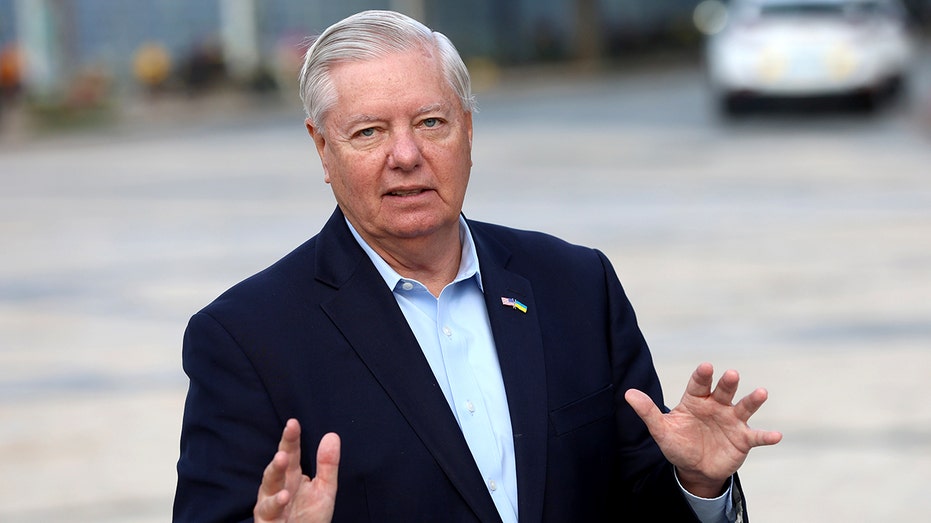
Sen. Lindsey Graham, R-S.C., even suggested the current system might require a total overhaul.
“When Obamacare was enacted in 2010, President Obama assured everyone that every family in America participating would save $2,500 in premium reductions. Instead, premiums have increased by around 100%. The system is unsustainable,” Graham stated.
FLASHBACK: TED CRUZ FORECASTS RISING OBAMACARE SUBSIDIES, NOW CENTRAL TO SHUTDOWN DISPUTE
“We intend to replace this flawed system with a better alternative for consumers, one that effectively reduces health care costs,” Graham further commented.
Graham was not the only Republican senator to voice opposition to Obamacare.
“Regrettably, our colleagues across the aisle have refused to acknowledge the widespread damage caused by Obamacare,” Sen. Ron Johnson, R-Wis., remarked. “Our primary issue in healthcare is the erosion of free-market principles, largely due to Obamacare’s flawed design, which necessitates fixing.”
Sen. Rick Scott, R-Fla., a former health care executive and a long-standing critic of the program, added his thoughts.
“It’s all a result of Obamacare. Government intervention often leads to increased costs,” Scott asserted.
Significantly, Republican criticisms of Obamacare on Saturday extended beyond the immediate issue stalling government funding discussions.
While Republicans have proposed a temporary funding measure to keep the government operational until Nov. 21, Democrats have rejected it 14 times, insisting that lawmakers first consider extending COVID-era emergency tax subsidies for Obamacare enrollees.
Republicans, who argue that the temporary subsidies and their expiration are unrelated to government spending, have mainly concentrated on the shutdown itself, rather than debating the COVID-era assistance. They have indicated a willingness to negotiate on the subsidies once the government is reopened.
However, President Donald Trump shifted the focus on Saturday morning with a post on Truth Social, suggesting that lawmakers should restructure the enhanced subsidies to directly benefit policyholders, instead of insurance companies who currently receive the tax credit payments.
TRUMP URGES SENATE REPUBLICANS TO DIVERT FUNDS FROM OBAMACARE-SUPPORTED INSURERS, PAY AMERICANS DIRECTLY
Following Trump’s suggestion, lawmakers began to criticize Obamacare’s structure.
“Obamacare is costing the federal government nearly $150 billion annually. That’s correct. We’re using $150 billion of your tax dollars to subsidize other people’s health care,” Sen. Roger Marshall, R-Kan., stated.
“When they promoted this to the American people, they claimed it would cost $40 or $50 billion, but we’re spending triple that amount. That’s $400 million each day,” he added.
Sen. Joni Ernst, R-Iowa, echoed these sentiments, asserting that Obamacare had not achieved its original goals.
“It’s evident that Obamacare has failed to meet its promises,” Ernst said. “The solution isn’t to pour more money into a broken system. We must fix the existing issues. We can eliminate the waste.”
HOUSE REPUBLICANS DIVIDED OVER OBAMACARE AS GOP CONSIDERS FIX AFTER SHUTDOWN
Similar to Ernst and Marshall, Sen. Jon Husted, R-Ohio, also addressed the Senate, urging Congress to investigate the factors driving up health care costs.
“I hope we address the costs and causes behind the increasing unaffordability of health care in our country. Since Obamacare began, health care costs have risen by 6% annually, while overall inflation has been 3% or less,” Husted commented.
“I hope we can reopen the government and resume serving the American people, while continuing the crucial discussion on how to make health care more affordable,” he added.
Although Sen. Majority Leader John Thune, R-S.D., has convened the Senate throughout the weekend to resolve the deadlock, the timing of the next consideration of spending legislation remains uncertain.