
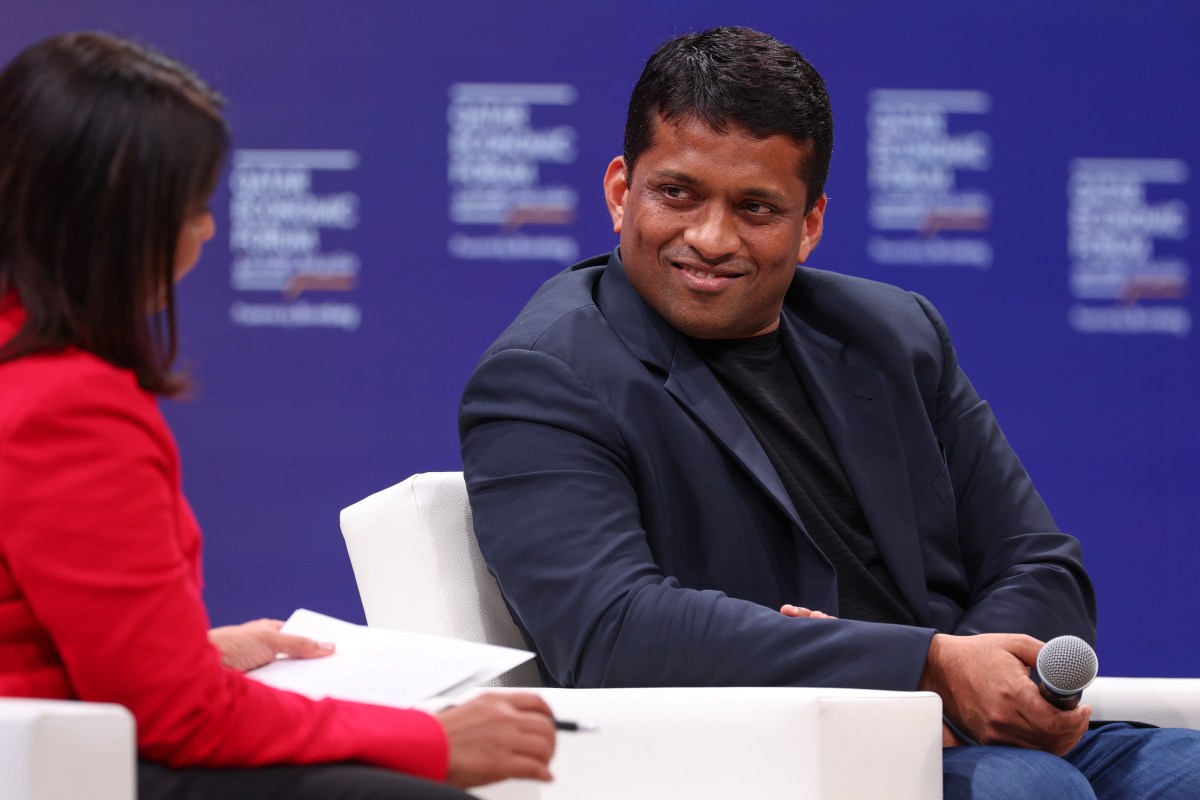
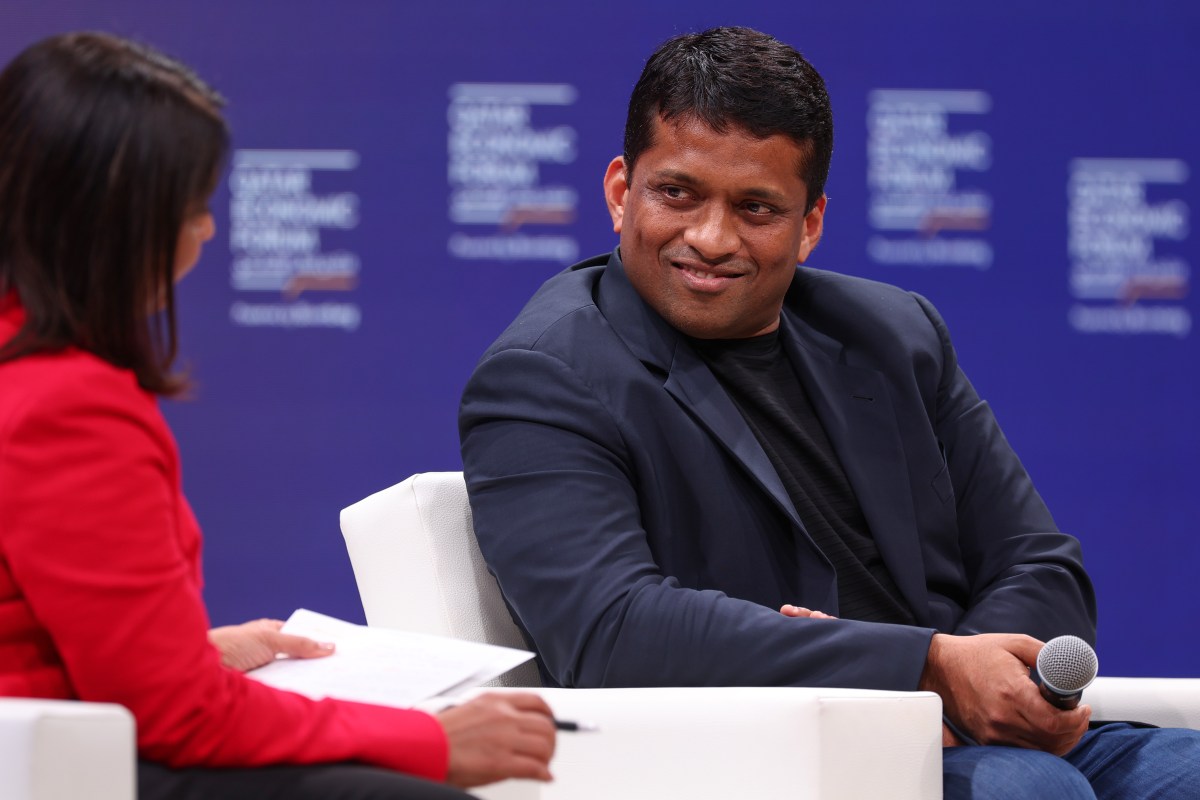
Byju Raveendran, the under-fire founder of Indian ed-tech behemoth Byju’s, has hit out at a U.S. bankruptcy court’s directive ordering him to remit over $1.07 billion. He is refuting any misdoing, blaming lenders for misinforming the court, and promising to appeal a decision that represents a sharp reversal of fortune for a former leading light of India’s startup explosion.
The bankruptcy judge in Delaware rendered a default judgment after determining that Raveendran had consistently flouted court directives and furnished “evasive, incomplete” answers concerning approximately $533 million that Byju’s U.S. arm purportedly transferred in 2022 and failed to recoup. The judge also pointed to problems involving a separate limited-partnership stake later assessed at about $540.6 million. The decision, dated November 20, arises from legal action by lenders seeking to recover funds tied to the $1.2 billion term loan they granted to the ed-tech startup in 2021.
Earlier in the year, in April, a cohort of U.S. lenders spearheaded by GLAS Trust took legal action against Raveendran and his spouse, Byju’s co-founder Divya Gokulnath, in the Delaware bankruptcy court regarding the missing $533 million in loan disbursements. The pair denied any impropriety at the time and accused lenders of plotting a hostile acquisition of the company. They later stated their intention to pursue a $2.5 billion lawsuit against GLAS Trust and other entities in India and other jurisdictions, though no such submission has been made public. This was in addition to the complaint Byju’s lodged in the New York Supreme Court contesting the acceleration of the term loan in 2023.
The court’s most recent order followed a September 29 session on the default request, during which the judge referenced a pattern of noncompliance spanning several months. The judge observed that Raveendran missed hearings, failed to meet extended deadlines, and disregarded a previous contempt order levying $10,000 in daily penalties that remain outstanding.
U.S. Bankruptcy Judge Brendan Shannon remarked that the relief awarded in the case was “extraordinary,” adding that “the circumstances of this case are, frankly, unique and unlike anything the undersigned has encountered before, thereby making such relief… richly warranted.” The judge has allowed the parties seven days to respond to the decision.
“We believe that the U.S. Court erred in its judgment of this matter and will be filing the necessary appeals and other contestations related to this judgment and related orders,” stated J. Michael McNutt, senior litigation advisor at Lazareff Le Bars, representing Raveendran, in a prepared statement to TechCrunch. “The court, in our view, ignored pertinent facts.”
Raveendran’s legal counsel contended that the court delivered the judgment without affording him an opportunity to mount a defense and instead leaned on an earlier contempt order. The counsel also asserted that the ruling neglected to acknowledge that GLAS Trust was cognizant that the Alpha loan funds were not utilized for the personal gain of Raveendran or other founders but rather for Think & Learn, the startup’s parent entity, the counsel stated.
Techcrunch event
San Francisco
|
October 13-15, 2026
The counsel conveyed that Byju’s founders are formulating claims against GLAS Trust and others across multiple jurisdictions, anticipated to seek at least $2.5 billion in damages and, failing a settlement, to be submitted before the close of 2025.
Nevertheless, the default judgment signifies a dramatic reversal of fortunes for Raveendran and his namesake company, formerly India’s most valuable startup with a $22 billion valuation and supported by global investors including Tiger Global, the Chan Zuckerberg Initiative, and Prosus. The company is now embroiled in legal battles, funding shortfalls, widespread layoffs, and a struggle for control as lenders and creditors compete to recoup what they can.
Raveendran had previously challenged the Delaware court’s authority, but the judge dismissed that argument in a prior decision, writing that “Raveendran’s conduct that gives rise to the litigation here relates to his activities … in the United States fundraising and serving as a director, officer, or manager of a United States corporation.”
Earlier this week, a filing in the Delaware bankruptcy matter alleged that the majority of the $533 million missing from Byju’s U.S. division, Alpha, was “round-tripped back to Byju Raveendran and associates.” In a response, Raveendran refuted the allegation, asserting that the funds were not employed for personal enrichment.
Meanwhile, in India, Byju’s is undergoing a court-monitored sale process after insolvency proceedings commenced last year, with initial bidders including Manipal Education and Medical Group (MEMG) and Ronnie Screwvala’s UpGrad.